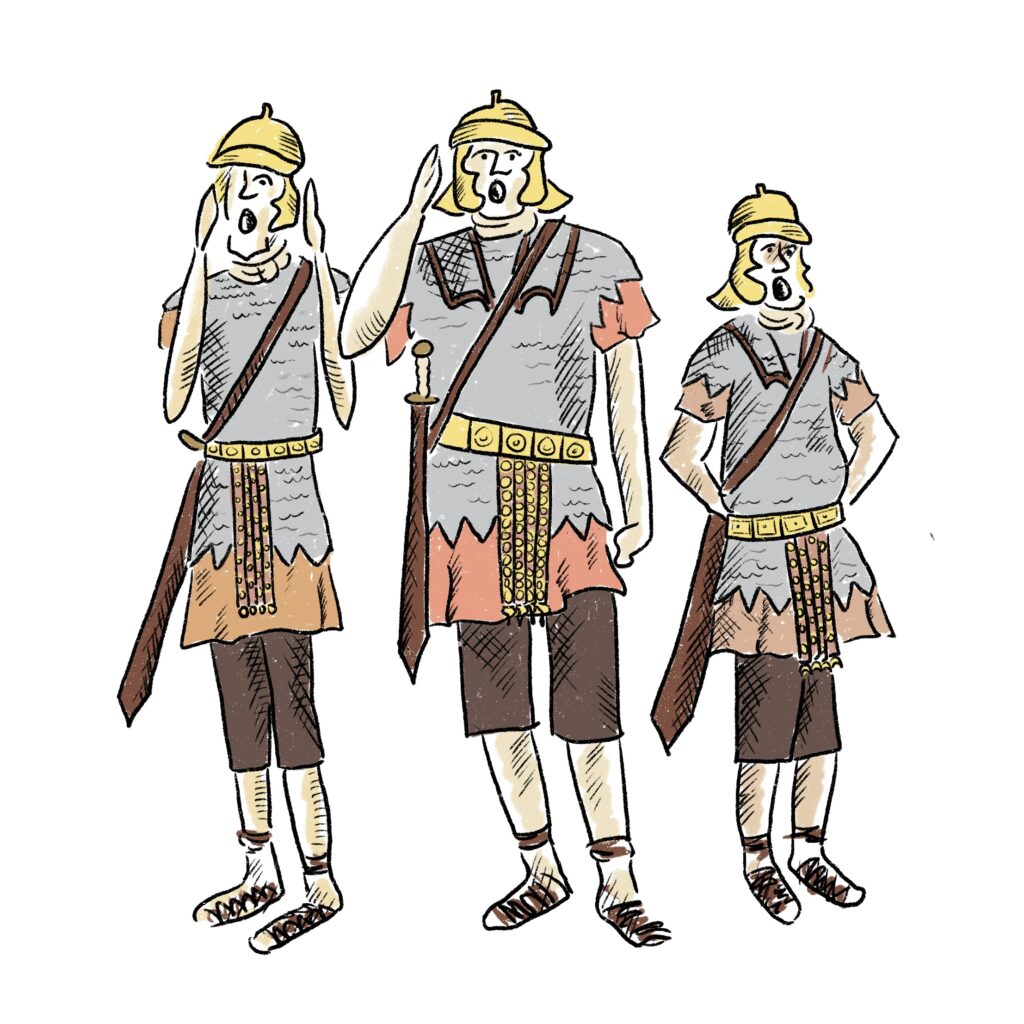
I’m illustrating the new version of Auda (yup, we’re still working on it, it’s not forgotten) and when doing so it’s easy to go a bit bonkers. Not only should they help with context, vocabulary and learning. They should be as accurate as possible. That is atleast my goal.
Illustrating Roman soldiers (milites) I’ve come across several interesting things that I had no idea I wanted to know, but that now that I know them things makes a bit more sense. I’d like to share one of the with you, one about the gladius, the Roman short sword:
The ordinary soldiers many times kept their sword on the right side. Normally a swordsman would keep his sword to the left for easy drawing of said sword in a fight. It just comes naturally if you’re right handed. This was also the custom of higher officers. Keep the sword on the left hand for easy drawing. And to show rank.
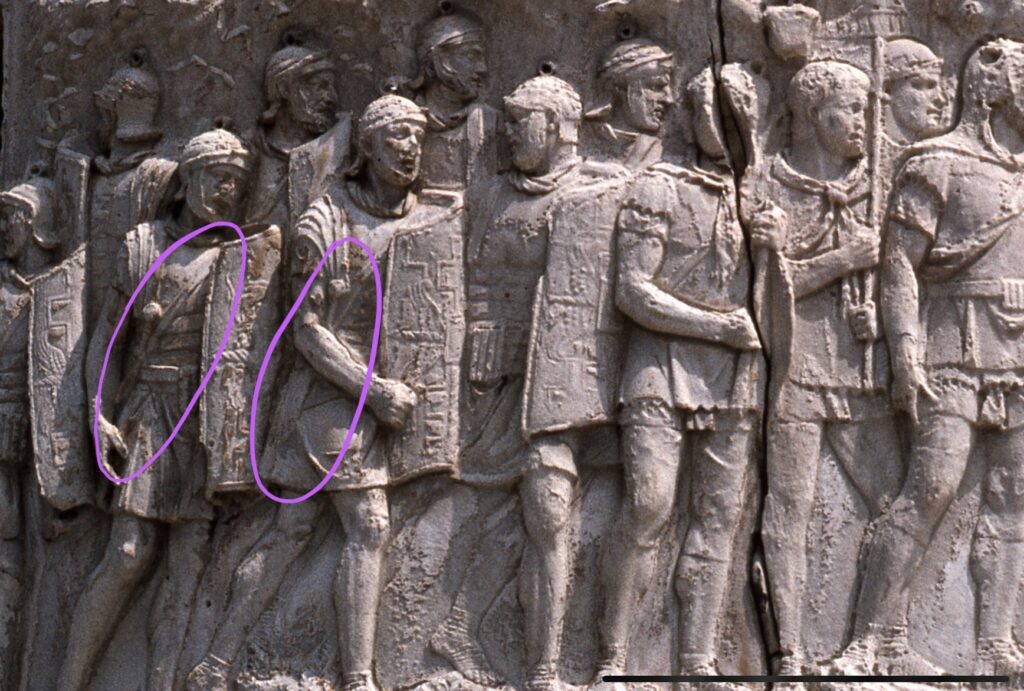
So why did the milites keep it on the right? It would mean you had to draw it straight up.
One explanation has to do with the scutum, the shield. The shield was held in the left hand close to your body, so a left hung sword would be in the way (or vice versa). Keeping the sword and shield separate made sure you didn’t have to lower your guard to draw your sword. And, because it was short (a gladius was roughly between 45–70 cm long) it was possible to draw in straight up, making the right hand hung gladius a hit.
Until next time!
Amelie